January 24th–28th, 2026
Cairo, Egypt
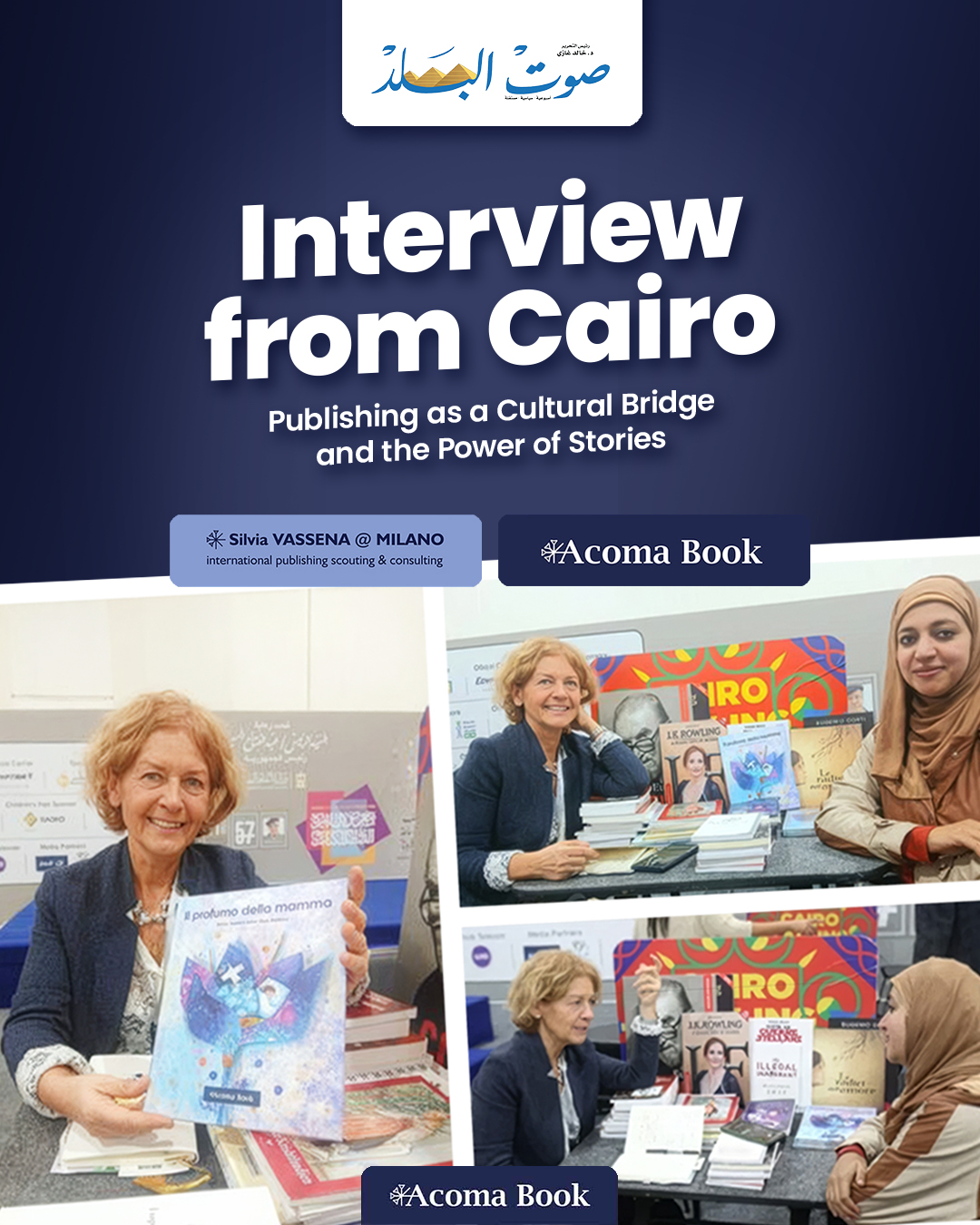
Being invited to CairoCalling 9.0, the international publishers’ fellowship for the Cairo International Book Fair, was an amazing experience. You will get a taste of some of the many experiences we at AcomaBook, through our publisher Silvia Vassena Milano Consulting, lived during those days.
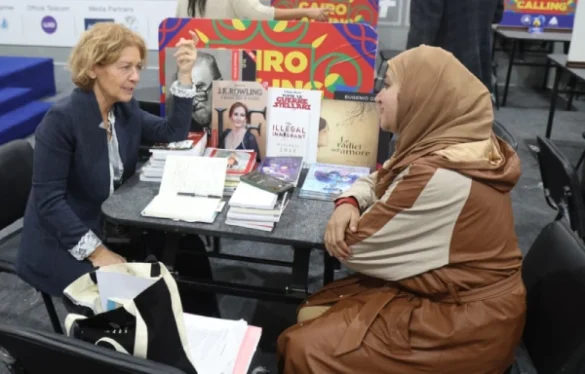
Among them was an intensive half-hour conversation with journalist Shaimaa Eissa, with whom we delved into the present-day publishing system and our own work. This talk was later turned into an interview published by BaladNews.
Many thanks to Shaimaa and the editorial team for the space and attention
International Publisher, “Mama’s Scent” Helped Us Understand Palestine’s Resilience
Written by: Shaimaa Eissa, 3 February 2026
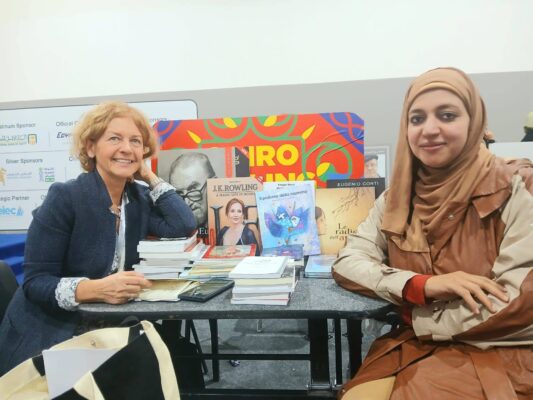
At a table filled with translated stories and famous photos of bestselling authors, including the creator of “Harry Potter,” Mrs. Silvia Vassena, the Italian publisher and founder of Acoma Book, sat to hold discussions with publishers in Cairo about exchanging publishing and translation rights for new titles.
On the sidelines of her first participation in the Cairo International Book Fair, a conversation took place in which she revealed her vision of publishing and her criteria for choosing stories.
• We asked her: Why did you choose to take part in the Cairo Book Fair program this year?
She said: For many years I have been visiting international fairs to meet publishers and exchange views on the best titles we make exchange deals for, going beyond geographical borders. Today I came to Cairo to participate in what is the most prominent among Arab book fairs. I believe that in the age of artificial intelligence, we need to understand publishing first and foremost as an industry, responsible for an important economic dimension in the lives of a large segment of authors and everyone working in the book industry.
In Italy there is a broad market of diverse readers, and in order to meet their wishes I needed to meet publishers from Egypt and experience the reality for ourselves, away from preconceived judgments. In light of the current political challenges, it has become important to exchange perspectives and writings in all fields in general, and in literature in particular, because it is the closest to people.
• What is your mechanism for selecting the most important Arab titles for your readers?
As a publisher and international publishing consultant, I learned to keep my eyes and my heart open to the scene, and to rely as well on trusted people for questions and advice, alongside my experience as a reader and a publisher who knows exactly what readers need, and who the best authors and publishers are.
• Tell us about your interest in publishing memoirs of famous writers.
Indeed, part of understanding creativity is knowing the environment it comes from. We have wonderful biographies of major literary figures, including Eugenio Corti, the late Italian writer, author of the great work “The Red Horse,” which was first published in Italy in 1983 and translated into several languages. Among contemporary writers, we also published memoirs by the author of the most popular series, “Harry Potter,” the English writer J. K. Rowling. We learn how she loved reading and worked as an English teacher before beginning her writing journey in 1990 during a train trip to London, and how she faced the hardships of poverty, depression, and family breakdown, thanks to her insistence on writing as a true lifeline. Since 1997, she reached success with the popularity of the first part of her series, which children around the world embraced. Perhaps these stories offer a real lesson for young writers in overcoming life’s difficulties.
• What is the secret behind choosing a Palestinian story as the first title of your own publishing venture at Acoma Book?
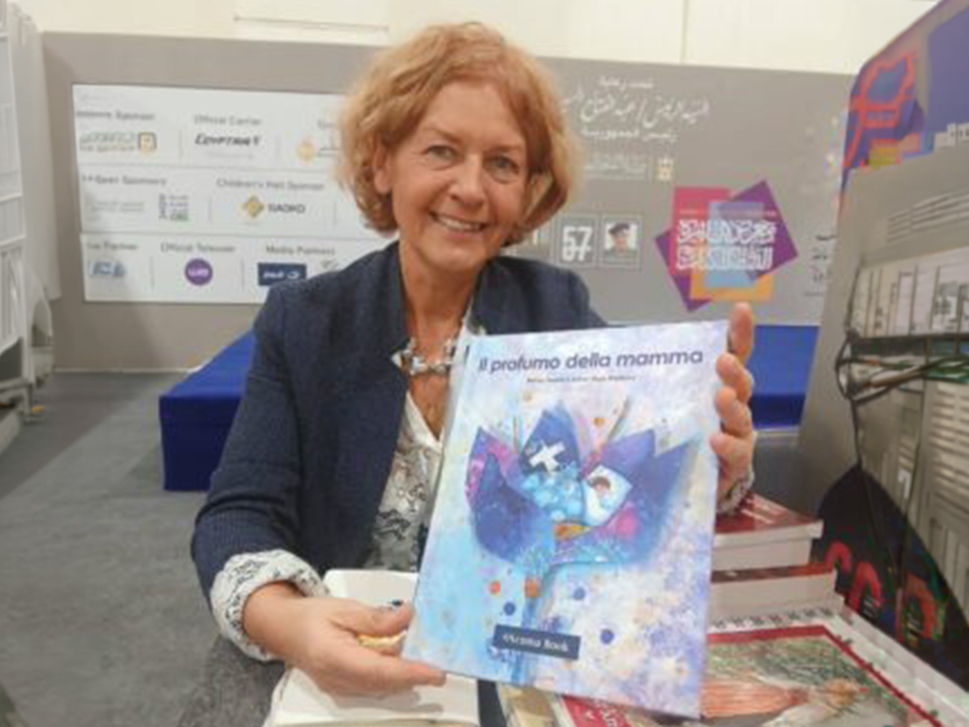
Indeed. In 2022 I began my own activity as a publisher, and I loved literary books that affect readers’ emotions. I was fortunate to meet a wonderful storyteller from Palestine, Sahar Naja Mahfouz, and a creative illustrator as well, Baraa Awwour. The story, “Mama’s Scent,” is about a child who smells his mother’s perfume while at school, and his questions begin about her presence after she has disappeared.
The story gives us something important about war, childhood, and how identity can become a means of facing challenges. I chose that story to lead, even though I publish across all fields of knowledge, because it touched my heart and the hearts of readers. This is what we always do when we realize that publishing means being an ambassador for humanity anywhere.
As for the creative illustrations, they were destroyed in the illustrator’s home as a result of the war. If she had not sent them to us digitally, it would not have been possible to publish them in the book. We understand well how an artist draws amid war and bombardment, and how words and drawings become means of resistance and survival despite everything.
• Is the book still capable of moving public opinion regarding Palestine?
In reality, it is no longer a humanitarian issue related to one country alone. Everything has become a matter of concern to the world. Gaza, for example, is a vital issue for the world’s conscience. In Italy we feel this issue closely because the Vatican itself rejects the bloodshed there. We sympathize with the innocent through relief campaigns and solidarity events. But in other European countries, the idea of solidarity may not even be present. I think politicians have played a major role in shaping public opinion, negatively and positively, regarding human rights issues. Let us agree that the book industry can contribute to stopping the bloodshed there.